Find the words.
In speech therapy, describe an object’s shape, use or associations. Our word-finding prototypes can recognize a spoken target and move to a related word.
Exploring living art as a way to support expression, conversation and practice, guided by the people in the room.
Explore the possibilities ↓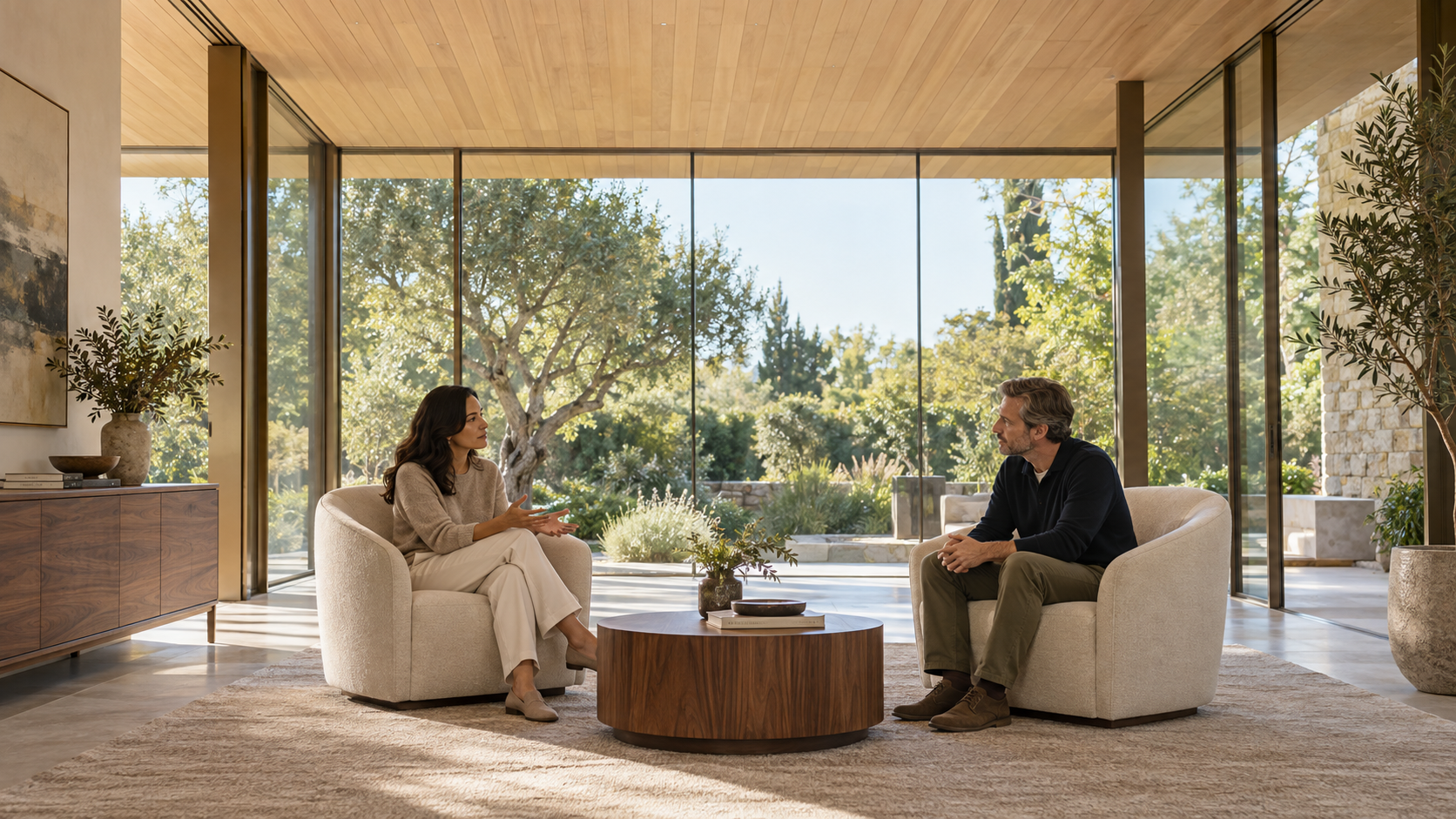
Speech becomes an image you can share. A cue can offer a question or a pause when you choose. In care, the clinician sets the purpose and pace.
In speech therapy, describe an object’s shape, use or associations. Our word-finding prototypes can recognize a spoken target and move to a related word.
Describe a memory as a place, a color or a landscape. Patient and therapist can explore what feels meaningful in the image together.
A phrase you agree on can invite a question or a pause. A clinician might use a cue to ask someone to reflect back what they heard.
Our speech-visualization work has been explored with Dr. Steven Zeiler’s stroke recovery team at Johns Hopkins for people with aphasia.
That work informs our interest in how living art might help people express and explore an idea together.
About the Zeiler Stroke Recovery Laboratory ↗This history concerns speech visualization. The Chandelier’s care applications are exploratory; treatment benefits and clinical measurement accuracy have not been established.
We welcome conversations with speech-language therapists, clinicians and researchers about the questions they would like to investigate.
Talk with us about care ↗